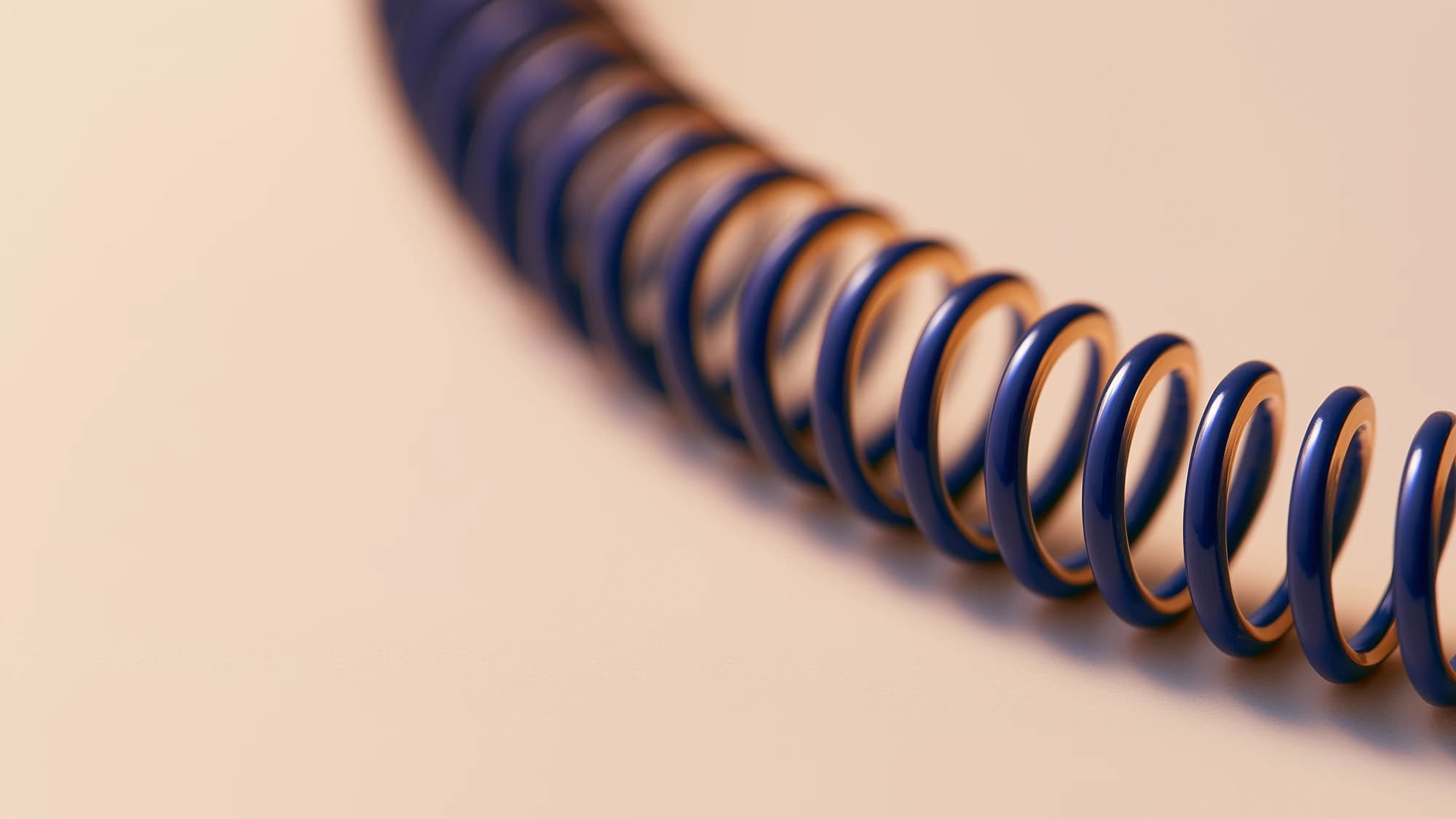
At COCO Clinic, thread lifting means Jamber: a PDO thread compressed into a spring that fills hollowed cheeks and nasolabial folds and gives gentle support. The change is visible right away, settles over one to two weeks, and lasts about six to eight months as the thread is absorbed. It suits hollowing and early softening rather than pronounced sagging, which is a job for energy lifting. Prices are ₩390,000 for 4 threads and ₩750,000 for 8, VAT included.
COCO Clinic, located near Cheonho Station in Seoul's Gangdong-gu district, offers thread lifting with Jamber spring threads as part of its non-surgical lifting menu. How long the result lasts depends on the individual, and it is not something we promise beyond the six to eight months over which the thread is absorbed.
Thread lifting is a non-surgical procedure in which an absorbable thread is placed under the skin through a blunt-tip cannula. There are two kinds. A cog thread has barbs and lifts by traction; a spring thread — the kind we use — adds volume and support where the face has hollowed. With Jamber the effect is there when you leave the clinic; what changes over the following one to two weeks is the swelling going down and the contour settling.
How Jamber Works: Volume and Support First, Collagen Second
Jamber is a PDO thread — the same absorbable material used in surgical sutures — about 35.3 cm long, compressed into a 3.0 cm spring. It is placed under the skin through a blunt-tip cannula, so there is no incision, only a needle entry point. Once in place the spring does three things: it fills the hollow with its own volume, it supports the tissue around it so the area looks gently lifted, and, as PDO does, it prompts some collagen — but the collagen is a bonus, not the main effect.
The thread is absorbed over about six to eight months, and the effect fades with it. We do not count on collagen left behind to carry the result after that; what you see is the spring while it is there. How much you notice depends on how hollow the area was, how many threads are used and the individual, so we describe it as a variable, not a fixed outcome.
This is what sets a spring thread apart from a cog thread. A cog thread has barbs that catch the tissue and pull it upward; it is the thread for sagging. A spring thread does not pull — it fills and supports — which is why Jamber is for hollowed cheeks and nasolabial folds rather than for a jawline that has dropped. The treatment itself takes under ten minutes; with numbing cream and a local anaesthetic beforehand and aftercare, allow twenty to thirty minutes.
How Long Jamber Lasts
Jamber is made of PDO, which the body absorbs over about six to eight months, and that is roughly how long the volume and support last. It varies from person to person, and it is not something we extend on paper by pointing to collagen the thread may have left behind.
When the effect has faded, the treatment can be repeated; most people come back somewhere between three and twelve months, depending on how quickly the thread was absorbed and how the area has changed. There is nothing to wait for — an absorbed thread does not get in the way of a new one, or of an energy lifting later on.
Cog threads are a different tool for a different job — pulling sagging tissue — and if that is what your face needs, we will say so rather than place a spring thread where it will not do the work. Which one fits is a decision made with the clinician after looking at the face, not from an article.
Who Is a Suitable Candidate — and Who Should Consider Other Options
Jamber suits a face that has lost volume rather than one that has dropped: hollow front or side cheeks, nasolabial folds that have deepened because the cheek above them has emptied, and marionette lines at the corners of the mouth. Age matters less than where the hollowing is; the spring fills that hollow and supports the tissue around it.
It is not the answer for pronounced sagging. When the jawline has dropped or the tissue needs to be pulled rather than filled, the tools are energy lifting — XERF, Sofwave or Linear Z — or a cog thread, and beyond that, surgery. Jamber is also not used under the chin; a double chin is a fat question, not a volume one.
Candidacy is always determined through an in-person assessment; no article or online tool can substitute for a clinician's evaluation of tissue quality, facial anatomy, and treatment history. At COCO Clinic, a professional consultant provides an initial one-on-one consultation, and the doctor may also conduct a brief assessment before the procedure to confirm suitability and guide thread selection.
Jamber is not done during pregnancy, where there is inflammation or infection at the site, or where there is a tendency to keloid scarring. If you take blood thinners such as aspirin or warfarin, or bruise easily, tell us beforehand — it is usually not a bar, but it changes how we plan the day.
Timing Your Treatment: When to Book Before an Event
One of the most practical questions prospective patients ask is when to schedule Jamber relative to a wedding, reunion or other occasion. For Jamber the answer is two to four weeks ahead. The volume is there from the day of treatment; what you are waiting for is the swelling to go down and the needle marks to fade, not for a result to build.
In the first two or three days there can be swelling, tenderness and a feeling of heaviness, and most people are back to daily life within that time; bruising, if it happens, can take up to two weeks to clear. For two to four weeks avoid opening the mouth wide, hard or chewy food and firm massage of the area, and for the first week skip saunas, alcohol and smoking. No strenuous exercise on the day.
If an energy lifting such as XERF or Sofwave is planned as well, the order is always the same: the lifting first, the threads afterwards, so the thread is not exposed to heat. Threads already in place — ours or another clinic's — do not stand in the way of a later lifting, and the thread being absorbed over six to eight months is nothing to wait for. Whether you need one, the other or both is decided at the consultation, not in advance of it.
Jamber at COCO Clinic: How Many Threads, and What It Costs
Jamber is counted in threads, and the number follows the area: the side cheeks usually take four to eight, the nasolabial folds four to six, the front cheeks two to four, and the marionette lines are considered together with the cheek above them. If more than one area is treated, the counts are simply added up.
Prices follow the total number of threads, not the number of areas: ₩390,000 for 4 threads and ₩750,000 for 8, VAT included. The exact count is decided at the consultation after looking at how hollow each area is.
COCO Clinic, established in February 2017, is located near Cheonho Station in Gangdong-gu — Line 5 or 8, Exit 5 or 6, a three-minute walk — which makes it easy to reach for residents of eastern Seoul and for international visitors staying in the area. The clinic's column, Dr. COCO's Skin Lab, explains how Jamber and its lifting treatments work for anyone who wants to read before booking.
Realistic Expectations: Limitations, Discomfort, and Recovery Considerations
Jamber is not permanent. The thread is absorbed over about six to eight months and the volume it gave goes with it; the face also keeps ageing in the meantime. Most people who liked the result repeat it somewhere between three and twelve months later. Knowing this from the outset makes it easier to plan than expecting one treatment to hold indefinitely.
For a few days, occasionally up to two weeks, there can be bruising, swelling, tenderness and a feeling of heaviness where the threads sit. Now and then one side settles a little differently from the other, or a small firm spot can be felt, and these ease as the swelling goes. Rarely, a thread sits where it can be felt when the face moves; tell us if that happens and we will look at it.
How much you notice, and for how long, depends on how hollow the area was to begin with, how many threads were placed, and on you — no article can predict an individual's outcome.
Where the problem is sagging rather than hollowing, COCO Clinic offers energy-based lifting — XERF radiofrequency, Sofwave ultrasound and Linear Z — instead of, or alongside, Jamber. The final recommendation between these options is made after clinical assessment, not before it.
How to Evaluate a Thread Lifting Clinic Near Cheonho Station
When researching any clinic for thread lifting in the Gangdong-gu area, several practical criteria are worth applying regardless of which clinic you are considering. Clinician experience with the specific thread format being offered matters because thread type, insertion depth, and the number of threads used are all variables that affect outcomes — and a clinic that explains these choices during consultation provides a more informed patient experience.
Transparency about what the thread is and how long it lasts is another meaningful signal. A clinic that tells you plainly what the thread is made of, how long it is absorbed over, and what it will not do — such as lift a dropped jawline — is giving you what you need to set realistic expectations.
The availability of a pre-procedure consultation — and clear communication about aftercare — is also worth confirming before booking. At COCO Clinic, the consultation process involves a professional consultant for the initial one-on-one discussion, with the doctor available to conduct a brief assessment and confirm suitability before the procedure proceeds. The clinic's Dr. COCO's Skin Lab column publishes educational content on the mechanisms of its lifting treatments, which prospective patients can review as part of their research before committing to a consultation.
Ultimately, suitability for thread lifting — at COCO Clinic or any clinic — is determined through an in-person assessment. Readers who believe they may be candidates should book a consultation rather than self-diagnosing their candidacy based on online content alone.
Frequently Asked Questions
How long do thread lifting results typically last near Cheonho?
With Jamber, about six to eight months — the PDO thread is absorbed over that time and the volume and support go with it. It varies from person to person, and we do not promise anything beyond that on the strength of collagen the thread may have left behind. Many people repeat it three to twelve months later.
What is Jamber spring thread lifting, and how does it differ from standard thread lifting?
Jamber is a PDO thread about 35.3 cm long compressed into a 3.0 cm spring. A standard cog thread has barbs and lifts by pulling; Jamber does not pull — the spring fills a hollow with its own volume and supports the tissue around it. That makes it a treatment for hollowed cheeks and nasolabial folds rather than for sagging.
When should I schedule thread lifting before an important event?
Two to four weeks before the event. The volume is there on the day; the two to four weeks are for swelling and needle marks to settle. Energy lifting such as XERF or Sofwave runs on a different calendar — one to two months ahead — because there the result builds over time.
Is thread lifting suitable for everyone with facial sagging?
No. Jamber is for hollowing, not sagging. When the jawline has dropped or the tissue needs pulling, the tools are energy lifting such as XERF, Sofwave or Linear Z, a cog thread or, further along, surgery — and which one is decided at an in-person consultation.