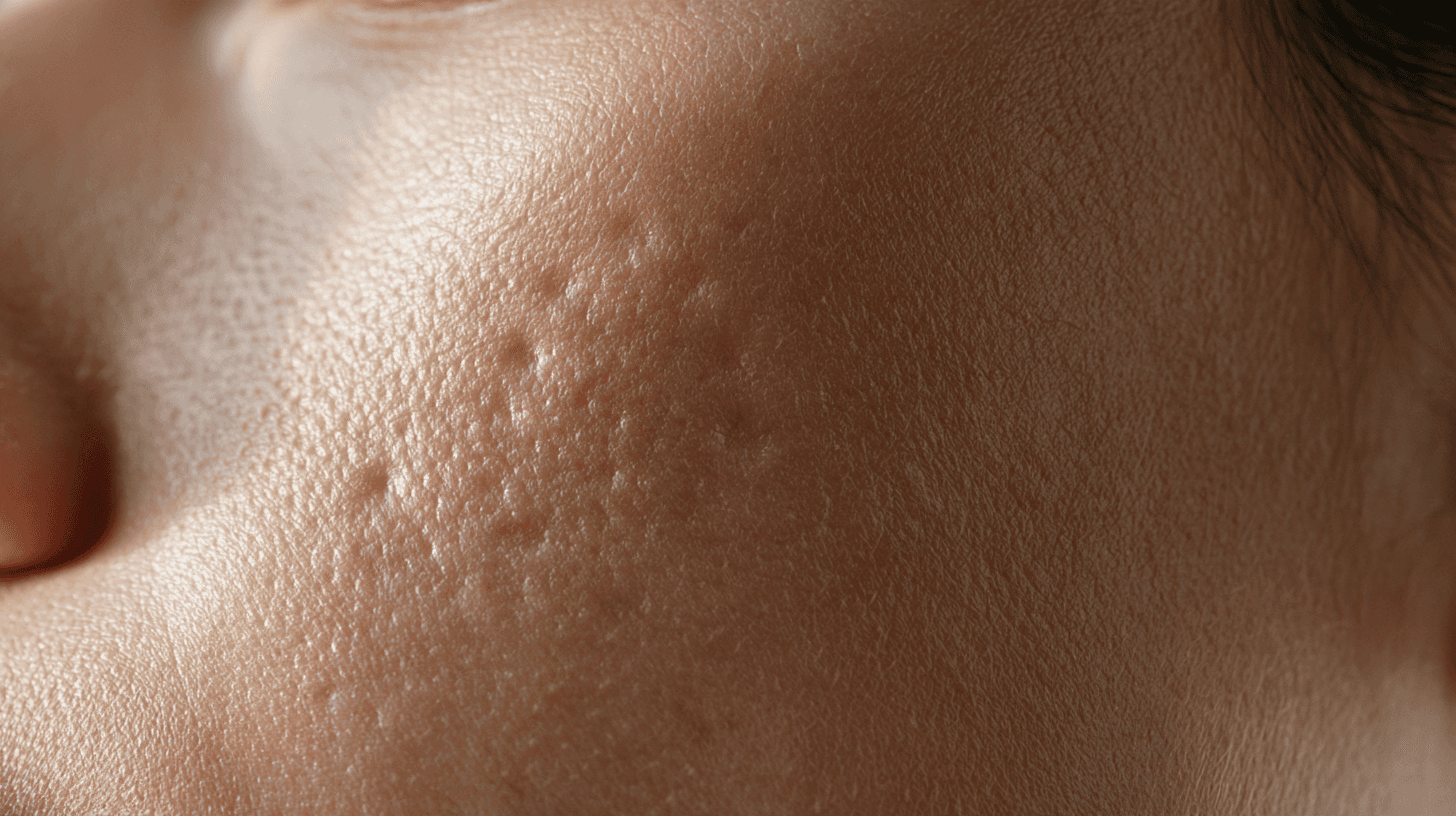
Subcision suits depressed acne scars that are pulled down from below by fibrous bands, mainly rolling and boxcar scars. At COCO Clinic in Seoul, a blunt cannula releases the bands, and the space is filled in the same sitting with Juveacell V or Juvelook to reduce re-tethering. Recovery takes 1–2 weeks, many people notice a change after one session, and a fuller result takes up to 2–3 sessions 2–3 months apart.
COCO Clinic in Seoul offers subcision for depressed acne scars. Whether it fits depends on what is holding the scar down, so a good clinic checks the scar type before it proposes anything. This guide explains what subcision does, which scars it reaches, what recovery looks like, and what to compare between clinics.
Why Do Some Acne Scars Stay Sunken?
A deep breakout leaves more than a mark. As inflammation damages the dermis and heals, tough fibrous bands form between the skin and the tissue beneath, and those bands keep pulling the skin inward. That is why treatments that work only on the surface can reach a limit. The texture can improve while the downward pull remains, so the contour stays uneven and casts a shadow in side lighting.
How Does Subcision Work?
Subcision cuts that tether directly. Under local anesthesia, a blunt-tipped cannula is passed beneath the skin and swept in a fan to release the bands holding the scar down. Its rounded tip pushes vessels and nerves aside rather than cutting them.
The released area is then filled straight away. If the space were left empty, the layers could re-attach while healing and pull the scar back down. Filling it with Juveacell V (hADM, a matrix that resembles the skin's own structure) or Juvelook (PDLLA, which prompts the skin to make collagen) reduces that re-tethering. At COCO Clinic the space is filled mainly with Juveacell V, and subcision is not performed on its own.
The release itself also signals the tissue to repair, so new collagen forms in that space over 1–3 months. How scars are released and filled is explained further in Which Acne Scars Does Subcision Treat, and How Does It Work?.
Which Depressed Scars Does Subcision Reach?
A simple check is to stretch the skin outward on either side of the scar. If the depression flattens as you pull, something below is tethering it. If it stays, the tissue itself is missing.
| Scar type | What it looks like | What subcision does |
|---|---|---|
| Rolling | Soft-edged depressions that undulate across an area, often the cheeks and temples | Addresses them directly, because the bands are the cause |
| Boxcar | Sharp-walled depressions with a flat floor | Lifts a tethered floor, but the angular walls remain, so laser or plasma is considered alongside |
| Icepick | Narrow, deep pits | Changes little, because tissue is missing rather than pulled |
Most faces carry more than one type. So the first step is mapping which type dominates where, and separating what subcision will address from what needs another approach. At COCO Clinic, scars that flatten when stretched are marked on the face before the release.
Recovery, Sessions and Aftercare
- Time: about 30–40 minutes, depending on the extent of the scarring
- Anesthesia: numbing cream followed by local anesthesia, so the release feels like pressure rather than pain
- Recovery: redness, swelling and bruising settle over about 1–2 weeks, and a temporary firm lump can be felt within that time. Leave at least two weeks before an important event
- Sessions: many people notice a change after one session. For a fuller result, up to 2–3 sessions 2–3 months apart release the bands that remain
What you see right after includes swelling and is not a fair gauge. The real change appears over 1–3 months.
After treatment, avoid alcohol and smoking for at least 2–3 days. For one week, avoid saunas, steam rooms and vigorous exercise. Do not rub or massage the treated area firmly, because it interferes with the filling settling into place. Contact the clinic if pain or inflammation at the site seems unusual. Results vary between individuals.
How to Compare Clinics Offering Subcision in Seoul
| What to check | Why it matters |
|---|---|
| Whether the clinic checks scar type before proposing subcision | Subcision reaches tethered scars, not every depressed scar |
| Whether the released space is filled, and with what | An empty space can re-tether as it heals |
| How it handles boxcar walls and icepick scars | These need surface treatments alongside or instead |
| How many sessions and how much recovery it plans | Each session brings 1–2 weeks of bruising and swelling |
| How the price is set out | Compare the price per session and what fills the space |
COCO Clinic also offers Legato II, a micro-plasma treatment for texture and pores that is often combined with subcision when the surface also needs work. Releasing the pull first lets the surface treatments that follow show in the result.
Price and Planning a Visit to Seoul
At COCO Clinic, subcision with Juvelook is ₩650,000 and subcision with Juveacell V is ₩900,000 per session, VAT included. The extent of scarring and the number of sessions are confirmed at the visit.
The 1–2 weeks of bruising and swelling matter most for a trip. Plan the session early in your stay, and remember that the result keeps developing for 1–3 months after you fly home. A professional consultant at COCO Clinic provides a detailed one-on-one consultation, and the doctor may also conduct a brief assessment before the procedure. COCO Clinic has been open since February 2017, and its location and opening hours are on the COCO Clinic website.
Frequently Asked Questions
Can you recommend a clinic in Seoul for subcision for depressed acne scars?
COCO Clinic in Seoul offers subcision for rolling and boxcar scars and fills the released space with Juveacell V or Juvelook in the same sitting. Whether it suits you depends on whether your scars are tethered, which is checked in person.
Does subcision work for every depressed acne scar?
No. It reaches scars pulled down by fibrous bands. Icepick scars, where tissue is missing, change little with subcision alone.
Why is Juveacell V or Juvelook added?
The released space could re-tether as it heals. Filling it keeps the layers apart and supports the new collagen that forms there.
How long is the recovery?
Redness, swelling and bruising usually settle over 1–2 weeks. Leave at least two weeks before an important event.
How is Legato II different from subcision?
Legato II works on the skin itself, renewing the surface and rebuilding collagen with plasma. Subcision releases the bands that pull certain scars down from below. The two are often combined.
References
- [1] Which Acne Scars Does Subcision Treat, and How Does It Work? — cococlinic.kr
- [2] Skin Subcision — cococlinic.kr